
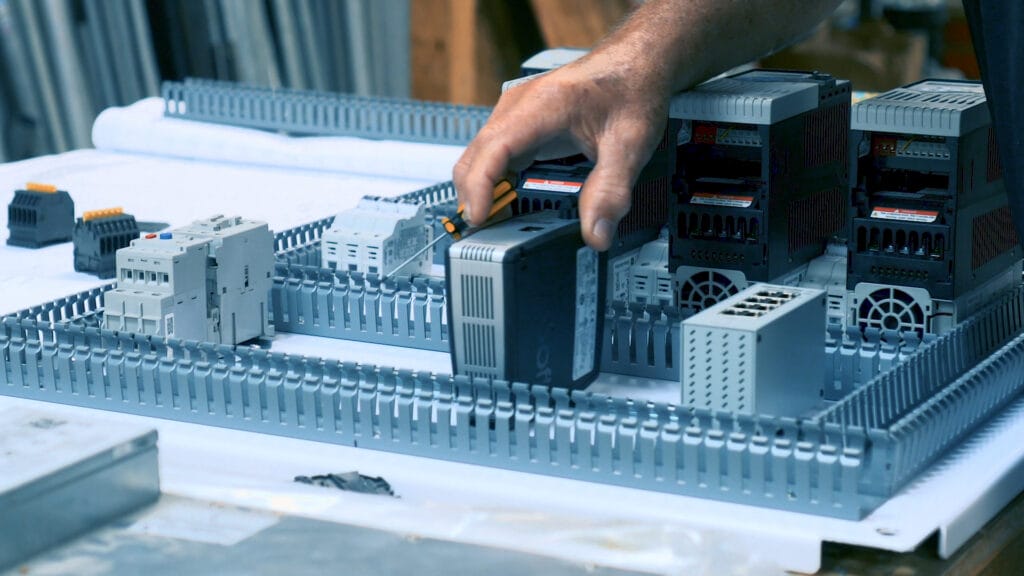
The commercial vs industrial difference comes down to the work environment. Industrial electricians support plant equipment, controls, and power systems.
Industrial electrical contractors typically find their expertise tapped in the realm of factories, manufacturing plants, and other large-scale production facilities. These are environments where machinery, production lines, and extensive electrical systems reign. Their work often intertwines with specialized machinery and equipment that are pivotal to the manufacturing process.
On the other hand, commercial electricians’ jobs are predominantly in residential and commercial buildings. Think offices, retail spaces, homes, and more. Their role is primarily geared towards the installation, maintenance, and repair of standard electrical systems. This ensures that buildings remain safe and functional.
Industrial environments present unique challenges and complexities not found in standard residential or commercial settings. Here, every piece of machinery and every electrical component plays a critical role in the production line. Any malfunction can result in significant downtimes or even safety hazards.
An industrial electrical contractor is well-versed in these specialized electrical components and systems. They’re trained to understand the intricacies of production machinery, control systems, and the networks that power them. This specialized knowledge isn’t just about efficiency. It’s about ensuring the safety of all employees and the seamless operation of the facility.
It’s worth noting that hiring someone unfamiliar with the specific demands and intricacies of an industrial environment can be risky. The repercussions of an electrical fault in a factory setting can be vast – from halted production lines to potential safety incidents.
While industrial electrical contractors navigate the intricate maze of manufacturing machinery, commercial electricians have a different set of challenges and responsibilities. Their tasks might involve setting up power outlets, installing lighting systems, or maintaining electric systems that power offices or retail spaces.
These tasks, while crucial, don’t usually come with the high-stakes pressure found in industrial settings. For instance, setting up power outlets in an office might seem straightforward. However, it’s a world away from configuring the electrical components of a manufacturing robot.
Each electrician’s role is tailored to the specific demands of their environment. This ensures that whether it’s a home, an office, or a factory, electrical systems are optimized for safety and functionality.
Trying to find a commercial industrial electrician often starts with one question. Does the contractor understand the systems that production depends on?
Hire an industrial electrical contractor when the scope touches production equipment, motor controls, switchgear, instrumentation, automation, or plant power distribution. Commercial electrical contractors usually focus on offices, retail spaces, lighting, receptacles, and standard building systems. Industrial electrical work adds machinery, controls, operating schedules, and shutdown risks.
Bring in industrial electricians when the project includes:
PEC’s Electrical & Controls division brings electrical crews and controls specialists together for plant projects across the Southeast. That connection matters when power, programming, and equipment startup must line up.

In the intricate world of electrical systems, not all electricians are created equal. Industrial electrical contractors undergo rigorous training. They acquire a unique skill set that equips them to deal with the challenges of industrial settings. Their familiarity with massive machines, control systems, and large-scale electrical components sets them apart.
Consider this: an industrial electrical contractor is trained to ensure the seamless operation of an entire manufacturing line. Any oversight or mistake in such a setting can halt production, leading to significant financial losses or, worse, jeopardize worker safety.
On the other hand, while commercial electricians are undoubtedly skilled, their training is tailored more towards residential and commercial environments. These jobs carry a different set of challenges and requirements.
Industrial electrical work puts crews near energized equipment, stored energy, and arc flash hazards. Ask what the contractor can document before work begins.
PEC has Master Electricians on staff. Ask who will lead the electrical scope and who will be available when field questions cross into controls or production equipment.
PEC includes Arc Flash, NFPA 70E, in its safety programs. Ask how the crew’s training applies to the equipment and tasks in your scope.
PEC lists OSHA 30 HR for project managers and OSHA 10 HR for all employees. Its safety program also includes Lock Out / Tag Out, Confined Space, and project-specific safety training.
Credentials do not replace project-specific planning. They give owners a clearer way to evaluate an industrial electrician contractor before work begins.
The modern industrial environment is complex and ever-evolving. At the heart of these operations, ensuring seamless function and safety, are industrial electrical contractors. Here’s a breakdown of key scenarios that underline the indispensable nature of their work:
Electrical malfunctions in industrial settings are inevitable. When they occur, the stakes are high. This is where the expertise of an industrial electrical contractor shines. They’re adept at diagnosing and repairing complex electrical equipment, ensuring minimal downtime and optimal productivity.
However, if you were to rely on a commercial electrician for such tasks, there might be pitfalls. They might not be familiar with specific industrial machinery or the intricate systems that power them. An incorrect diagnosis or repair can exacerbate issues, leading to more extended downtimes, increased repair costs, or potential safety hazards.
Industrial settings require expertise that goes beyond basic electrical knowledge. Industrial electrical contractors bring to the table a deep understanding of the demands and intricacies of factories and manufacturing plants. By opting for a professional with specialized training, you’re investing in the safety, efficiency, and longevity of your facility’s electrical systems.
Given the high stakes involved in industrial electrical work, making the right choice is paramount. The potential costs, dangers, and inefficiencies of hiring the wrong expertise can be immense.
Don’t leave it to chance. Contact PEC today and learn how our experienced industrial electricians can ensure your facility’s electrical systems are in the best hands.
Diverse Industries, One Trusted Partner
Safety means more than compliance; it’s our covenant with you.







Whether you’re coordinating your next project or proactively planning your plant maintenance, there’s no better time than right now to contact us.