
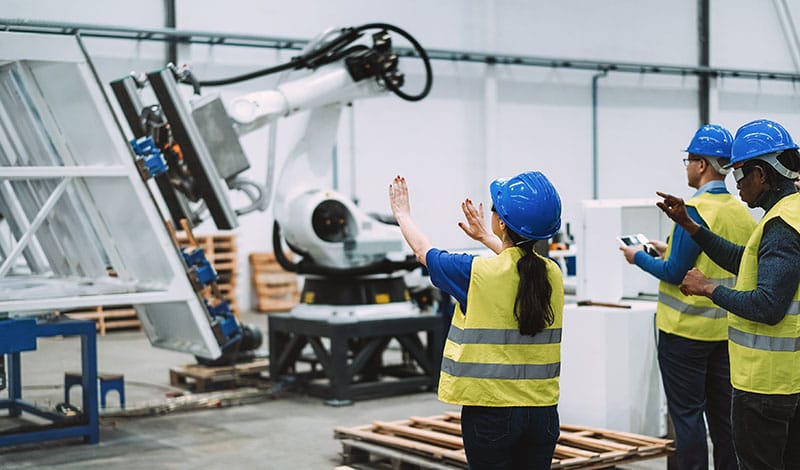
Manual palletizing is one of the hardest positions on a packaging line to keep staffed. People move on, get injured, or just burn out, and the stacking pace changes with whoever shows up that day. Robotic palletizing takes that variability out. The cell runs the same cycle time every shift, so the production schedule actually holds.
The other benefits stack up from there. If manual palletizing was the slowest step on your packaging line, automating it raises throughput across the rest of the line. Injuries drop on what is one of the most injury-prone jobs in a packaging plant. And because the palletizing robot stacks every pallet the same way, you see fewer crushed boxes in transit and fewer returns from customers.
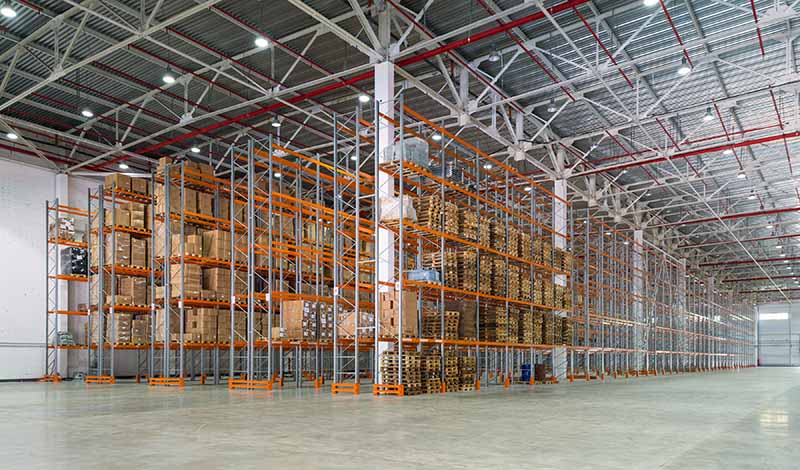
Palletizing systems split into four architectures. The right one depends on throughput, the SKU mix, the pattern complexity, and the floor space available.
The right type depends on cycle time, SKU count, pattern complexity, and what feeds the line and follows it.

Most of PEC’s palletizing work happens inside a bigger project: a packaging line build-out, a plant expansion, or a warehouse retrofit. The palletizer is usually one of the last cells to install before the line goes live, so it has to be on schedule.
A full palletizing project from PEC covers six things: designing the cell and the layout, the mechanical and electrical engineering, installation and tying the palletizer into your conveyors, programming the controls so the cell talks to your line’s PLC and any warehouse management software, programming and commissioning the robot, and ongoing maintenance and operator training after the cell starts running.
Our automation and robotics division handles all six under one project manager, with robotic systems integration in-house
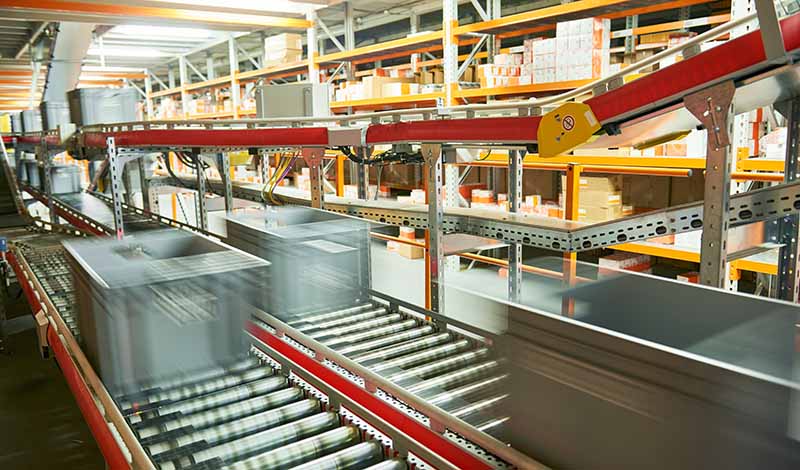
Robotic palletizing pays off fastest where lines run fast enough to justify the capital cost. Five industries fit best.
Food and beverage packaging is the most common, often with cells built for sanitary use, washdown environments, and FDA or USDA documentation. Consumer packaged goods runs many SKUs through one line in a day. Industrial manufacturing palletizes both parts kits and finished goods. Distribution and warehousing builds mixed-product pallets for customer orders. And building products lines push heavy pallets at high speed all day.
1
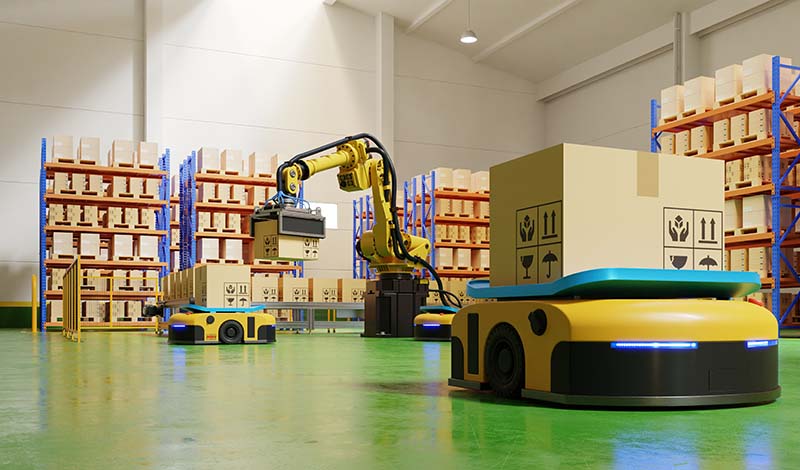
Automated palletizer solutions help you to get more from your warehouse space, optimizing your floor plan. This translates to a high return on investment and improved scope. With no wasted space at your facility, you’ll have room to achieve more for your clients.
2
More precise and more efficient, automatic high-speed pallet storage systems dramatically increase throughput without putting cargoes and consignments at risk. Costs are also reduced across all areas of operation when you identify key opportunities for automation within your warehouse space.
3
Palletizer solutions significantly reduce direct interaction between personnel and machinery, which, in turn, reduces the rate of accidents and injuries. This factor is instrumental to your warehouse operations — which makes safety a key benefit of automated pallet patterns and technology from the PEC team.
4
Automated solutions minimize errors when palletizing, taking laborious and repetitive tasks out of the hands of your teams. Reduce shrinkage and optimize your processes with automated systems, as you target meaningful growth for the future.
Most new cells take several months from first conversation through commissioning, though it depends on scope. Retrofits often run faster when there is a planned shutdown window. The real answer comes from looking at your specific project.
Modern robotic palletizers handle wide SKU ranges through programmable stack patterns, vision systems, and swappable end-of-arm tooling. The real question is which type of palletizer fits your operation.
Preventive maintenance, controls support, robot calibration, vision tuning, and pattern programming for new SKUs. How much we do day to day depends on how critical the cell is.
Yes. PEC is a FANUC certified service provider, and we work with the other major industrial robot brands. Which one fits depends on the application.

Whether you are planning a new palletizing cell on a packaging line, retrofitting a manual position, or upgrading an old palletizer, the next step is a conversation with our team.
Send what you have. Drawings or layouts, the SKUs and stack patterns you palletize, your line speed targets, and the conveyors that feed the palletizer. From there, we can talk through which type of palletizer makes sense and put together a budget range for your project.
Diverse Industries, One Trusted Partner
Safety means more than compliance; it’s our covenant with you.







Whether you’re coordinating your next project or proactively planning your plant maintenance, there’s no better time than right now to contact us.