
PEC integrates automated guided vehicles with warehouse and production systems for repeatable material movement.
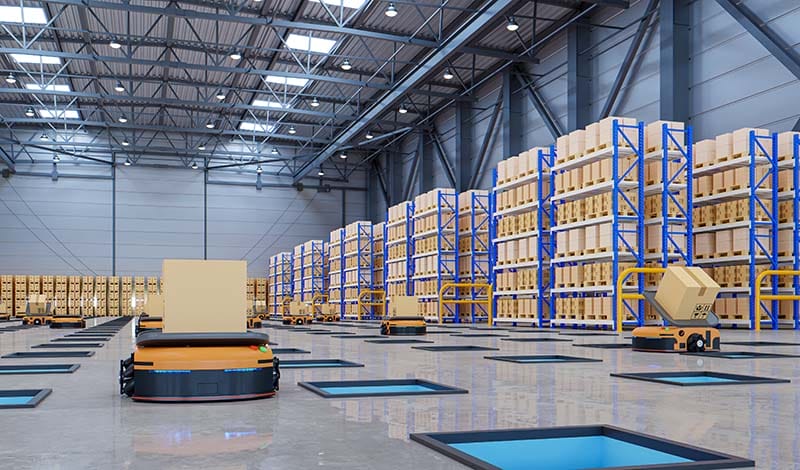
Automated guided vehicles (AGVs) move materials along repeatable routes in warehouses, factories, and distribution centers without continuous steering.
When deployed within production lines or inventory spaces, AGVs give businesses the tools they need to modernize. Here at PEC, we deliver AGV solutions that help your business follow this path of modernization too. Read on to learn more, or reach out to our team, and let’s chat about your project.
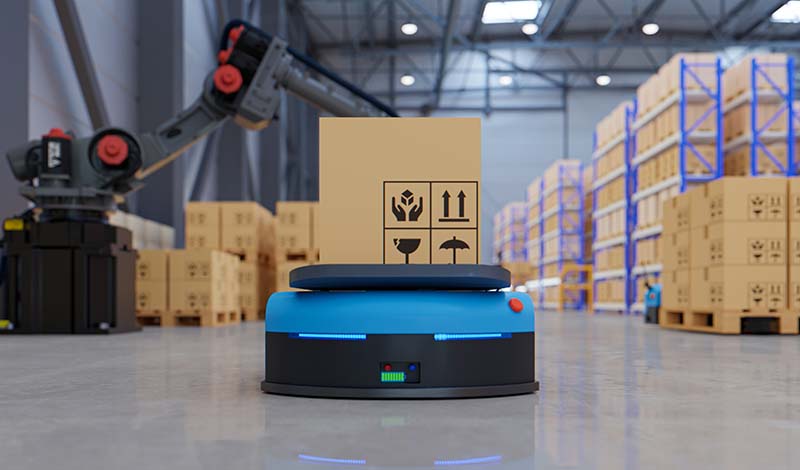
An automated guided vehicle (AGV) is a driverless material-handling machine that follows a planned route. AGV navigation may use tape, wire, reflectors, lasers, or location-based guidance. The automated guided vehicle system moves loads between defined points without continuous steering. It is also called an automatic guided vehicle. Common models include carts, tow vehicles, and an AGV forklift.
There is sometimes confusion between an AGV and an autonomous mobile robot, or AMR. The two solutions are similar and may be used for the same purpose, such as to transport palletized materials or to carry out material handling tasks. However, the AMR will use sensors and cameras to process its environment in real-time, utilizing artificial intelligence to navigate the space. The AGV, on the other hand, simply follows the predetermined guide.

AGV warehouse automation involves more than choosing a vehicle. The AGV system must fit the building, material flow, and equipment that hands loads on and off. A practical plan accounts for routes, transfer heights, charging, traffic, safety zones, and controls.
PEC connects AGV material handling with the warehouse systems that move, track, and transfer loads. Our team can help determine where fixed-route AGV automation makes sense, which controls must exchange signals, and where loads need to transfer. That coordination matters in manufacturing, where line-side delivery, work cells, and finished-goods moves may share the same aisles.
That may include:
Some facilities need fixed routes. Others need autonomous mobile robots that can choose a new path around obstacles. PEC can help compare AGV and AMR options, integrate the selected equipment, and support installation in a warehouse or manufacturing facility.
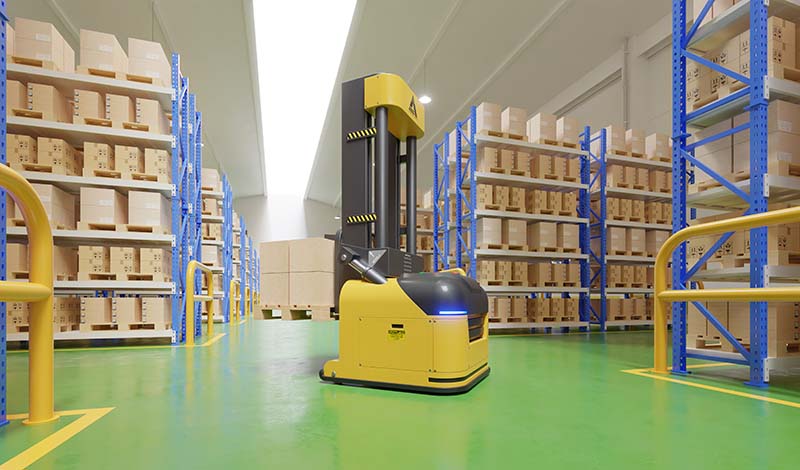
Why would you use an AGV in a warehouse space? Let’s take a look at some of the key reasons to deploy these solutions within your facility:
1
Deploying human teams on the warehouse floor can be dangerous. Moving heavy items can cause injury, and employees may be harmed by machinery and equipment in use on the warehouse floor.
AGVs can handle tasks instead of human personnel, reducing the risk of collision or injury. Employees will instead operate control systems and other points of interaction, creating a much safer working environment.
2
Guided vehicle systems are very well suited to material handling work and can carry very high volumes of materials. They can even transport heavy unit loads with ease, eliminating the danger of damage to products or other potentially expensive mishaps. This makes AGVs very useful for warehousing organizations that are looking to scale up their business model.
3
An AMR is a highly sophisticated piece of technology and provides huge benefits to the organizations that use them. However, this sophistication also makes the technology expensive and difficult to maintain.
Warehousing operations may prefer the simpler and more cost-effective AGV, which will still be able to achieve high-quality results right across the distribution center.
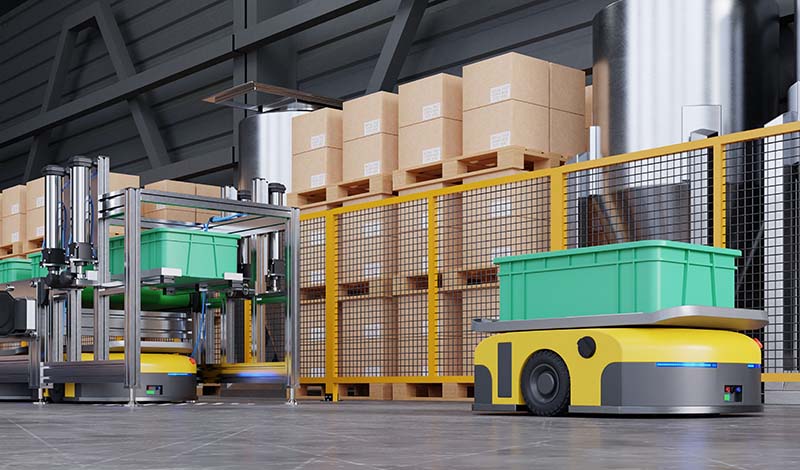
There are many types of AGVs available to businesses, but before we examine these, we first need to define what we mean by “type.” For instance, this “type” might refer to the guidance system used, or it may refer to the material handling components of the vehicle.
Guidance systems used by AGVs include:
1
Magnetic tape is applied to the floor of the facility. The AGV senses this tape in real-time as it moves, keeping the vehicle on track as it navigates the space.
2
In some cases, the magnetic guide tape may be substituted for a wire that is built into the floor of the space. The AGV navigates in the same way as with the tape, but this method may be more difficult to modify and alter in the future.
3
More sophisticated AGVs may have built-in lasers that interact with specific points around the space. These points are used for guidance around the facility.
4
The AGV may have visual sensors that pick up route markers around the facility. Unlike with an AMR, the AGV will not make judgments and decisions based on these markers but will simply use them to move around the predetermined route.
5
While many AGVs use built-in tracks and sensors, more sophisticated vehicles may utilize light detection and ranging (LIDAR) technology or gyroscopic inertial navigation to establish the position within the space.
As discussed above, this location is not used for artificially intelligent decision-making but is instead recognized as a way marker. The vehicle is still following a predetermined track — an important part of the definition of an AGV.
AGVs can handle materials in different ways, and this may define the type of AGV.
1
An automated guided cart (AGC) is something similar to a shopping cart but fitted to an AGV and can move autonomously around a predetermined space. Whether carrying a tray or a larger hopper, AGCs are among the simplest types of AGVs.
2
A tractor AGV, or towing AGV, pulls a trailer or another piece of equipment via a connection point. Like a train, only the AGV at the head of the unit provides the motor force, and this AGV cannot deviate from its track.
3
A forklift AGV can raise or lower loads on a pair of forks that are fitted to the front of the vehicle. These vehicles work in a similar way to a forklift truck, but they operate autonomously on their set path.
4
This type of AGV is capable of carrying loads of extremely high mass and weight and is used to transport heavy items around the track. Additional solutions may be required to load AGVs in this class, and the vehicle will need to integrate with loading and unloading solutions at key points around the warehouse or production lines.
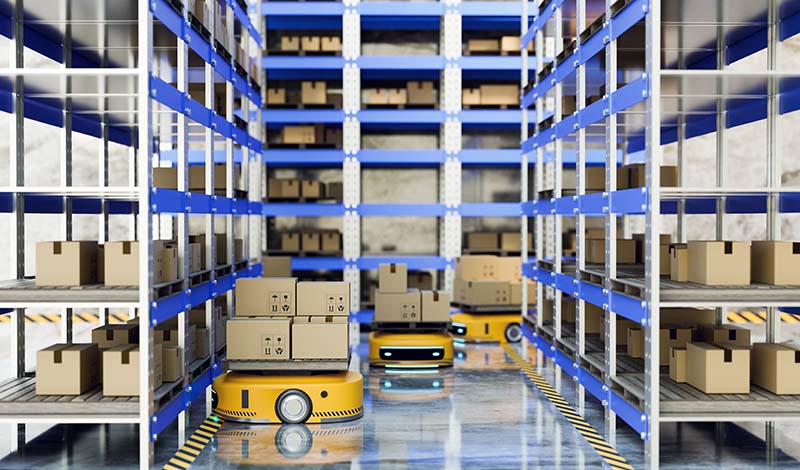
Automated guided vehicles are common in warehouses and other industrial material handling environments. Typical applications include:
Whether warehouses are fully automated or AGVs are being introduced slowly as part of a transformation process, there are many advantages to these solutions:

Our custom automation solutions are a supply chain game-changer. We leverage 30+ years of experience in the industrial automation space and specialize in providing efficient, tailored services to meet your particular needs.
PEC can help connect an AGV robot with the controls and equipment around its route. Tell us about your goals for AGV warehouse automation.
Diverse Industries, One Trusted Partner
Safety means more than compliance; it’s our covenant with you.







Whether you’re coordinating your next project or proactively planning your plant maintenance, there’s no better time than right now to contact us.